
Organic Matters
Soil Biology Assessments, Consulting & Education
Soil biology analysis, soil health consulting, and biologically active compost tea systems for farms and vineyards.
Services Overview
Soil Biology Analysis
Direct microscopy is used to evaluate the living microbial ecosystem in soil, including bacteria, fungi, protozoa, and nematodes. This analysis helps identify how the soil food web is functioning and where biological gaps may be limiting soil health.
Compost Tea Services
Soil chemistry data, soil biology insights, and farm goals are integrated to develop practical soil health strategies. These plans help farms improve nutrient balance, increase organic matter, and transition toward more regenerative management systems.
Soil Health Consulting
A fungal-dominant compost tea system designed to introduce beneficial microorganisms into agricultural soils. The service includes brewing equipment rental, training, and high-quality compost and food resources so growers can apply biologically active teas throughout the season.
Building Climate Resilience in Vineyards
〰️
Building Climate Resilience in Vineyards 〰️
I co-authored a Michigan State University publication focused on how soil health supports climate resilience in vineyard systems.
The document explores how soil biology and organic matter influence vineyard resilience, nutrient cycling, and long-term soil stability.
One important concept discussed is how microbes transform plant residues into different forms of soil organic matter.
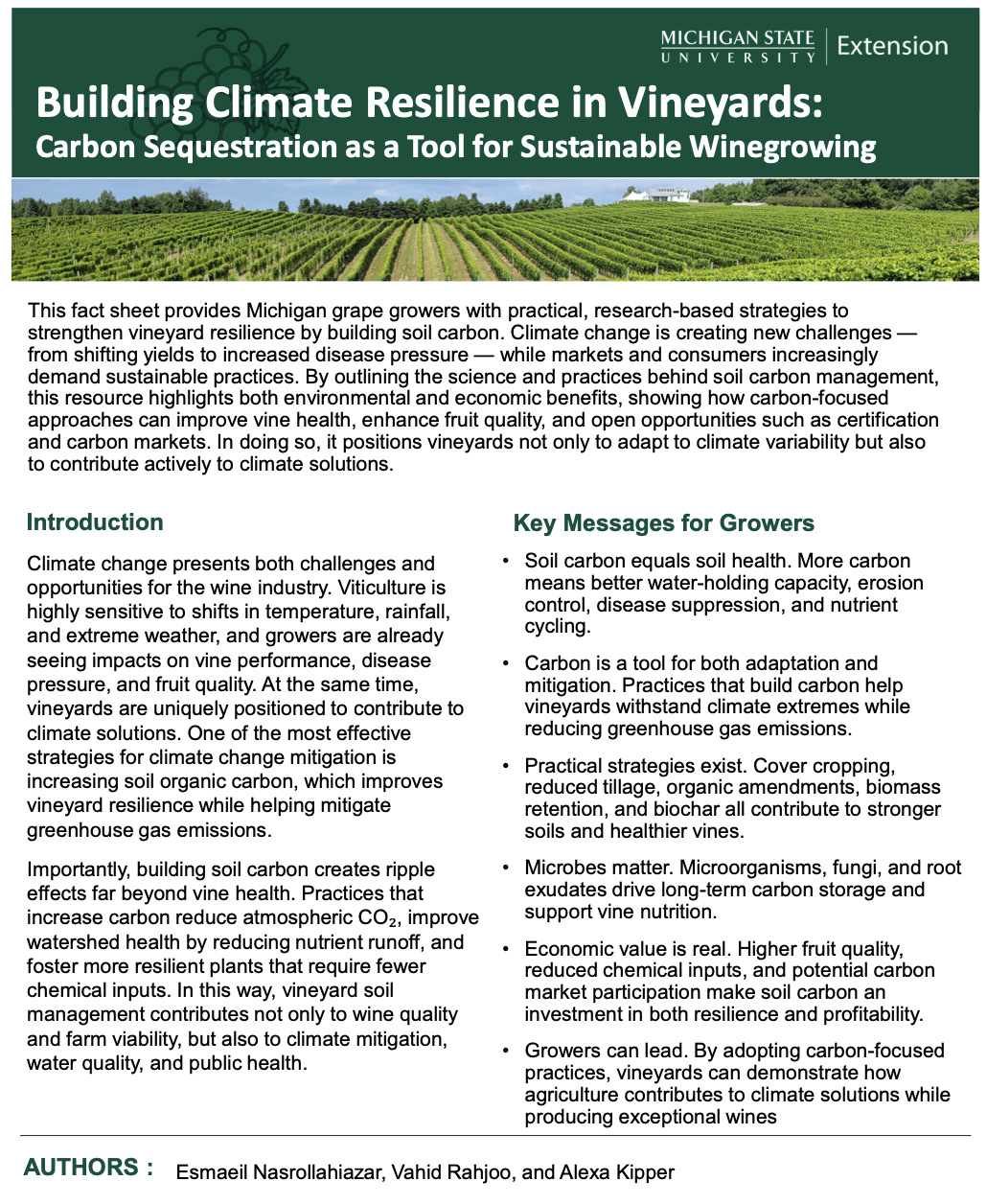
Understanding how SOM pools interact helps explain how regenerative management practices can build long-term soil carbon and resilience.
DOM — Dissolved Organic Matter
Dissolved organic matter represents the most biologically active carbon pool in soil and fuels microbial activity around plant roots.
POM — Particulate Organic Matter
Particulate organic matter consists of partially decomposed plant material and microbial residues that serve as an active substrate for soil organisms.
MOAM — Mineral-Associated Organic Matter
Mineral-associated organic matter forms when microbial byproducts bind to soil minerals, creating highly stable carbon that can remain in soil for decades.
A Systems Approach to Soil Health
3️⃣ Biological Implementation – Compost Tea Systems
Once the soil strategy is established, compost tea applications can be used as a practical way to introduce beneficial microorganisms into the soil ecosystem.
The compost tea service provides a fungal-dominant brewing system, including equipment rental, brewing instruction, and high-quality compost and food resources.
2️⃣ Soil Health Strategy – Building the Plan
Soil biology data can then be integrated with soil chemistry testing and farm management goals to develop a comprehensive soil health strategy.
Using the Soil Health Trinity framework — soil chemistry, soil biology, and organic matter dynamics — customized plans are created to address nutrient imbalances, improve microbial diversity, and build organic matter over time.
1️⃣ Soil Biology Analysis – Understanding the System
The process begins with evaluating the living microbial ecosystem in soil using direct microscopy. By identifying bacteria, fungi, protozoa, and nematodes, we can assess how the soil food web is functioning and identify biological gaps affecting nutrient cycling and soil health.
My services are designed to work together to help farms understand their soil ecosystem and implement practical regenerative management strategies.